Commercial Tree Planting for Business Premises: Improve Entrances, Boundaries and Outdoor Spaces
Commercial tree planting can do far more than fill spare ground around a building. For business premises, the right planting can strengthen first impressions, define boundaries more clearly and turn hard, underused areas into outdoor spaces that feel better organised and easier to manage. When trees are chosen and positioned well, they support both presentation and day-to-day use.
At Matthew Thomas Landscapes, we provide tree planting and wider soft landscaping works for commercial, industrial and business clients from our base in Pontarddulais, Swansea. Established in 2004, we help clients plan practical schemes that suit the site, the setting and the level of maintenance they want to manage over time.
Why commercial tree planting matters for business premises
On a commercial site, trees are not only decorative. They help organise space, soften hard surroundings and make the approach to a building feel more deliberate. That matters whether you manage an office frontage, industrial premises, shared development or another customer-facing site.
Improve first impressions at entrances, reception areas and visitor routes
Define boundaries without making the site feel overly harsh or exposed
Break up large hard-surfaced areas such as frontage zones and car parks
Make outdoor spaces more welcoming for staff, visitors and occupiers
Support a wider landscaping scheme alongside turfing, fencing and ongoing maintenance
Entrances that look more considered
The approach to your building shapes opinion before anyone reaches the door. Trees can frame arrival routes, soften the frontage and give an entrance a more established, professional feel. Even a simple planting layout can make a site look more intentional.
This is especially useful where the building sits within a lot of paving, kerbing or parking. Trees help balance those harder elements and create a more welcoming arrival point.
Boundaries that feel defined, not severe
Perimeter areas are often practical first and visual second. Fencing, walls and long edge lines may be necessary, but they can make a site feel stark if there is no planting around them. Trees help soften those edges while still allowing the boundary to do its job.
Used carefully, planting can also help distinguish customer-facing areas from service zones and create a tidier transition between the site and its surroundings.
Outdoor areas with more structure and balance
Not every commercial outdoor space needs a full redesign. Sometimes the biggest improvement comes from adding structure to an open or underused area. Tree planting can help courtyards, side spaces and frontage strips feel more complete without overcomplicating the layout.
For businesses that want the exterior to reflect the professionalism of the organisation inside, that kind of visual order matters.
Where commercial tree planting adds the most value
The best planting positions depend on how the site works day to day. A good scheme is not simply about finding empty ground. It is about choosing locations where trees will improve presentation and still leave the premises practical to use.
Entrance drives, frontages and reception approaches
These are often the highest-impact positions. Trees can guide the eye towards the building, improve the look of visitor routes and make the entrance feel more established. Where there is signage, parking or a reception approach, the planting needs to complement those features rather than compete with them.
Spacing and scale are important here. Trees should add presence without obstructing visibility or making the frontage feel crowded.
Boundary lines, perimeter strips and fence edges
Boundary planting works well where businesses want a softer edge to the site or a stronger sense of separation between different external zones. Along long fence runs or exposed perimeter strips, trees can reduce the feeling of empty space and help the whole site look better planned.
This can be particularly effective when planting is coordinated with broader external improvements rather than added as an afterthought.
Shared outdoor spaces and underused corners
Many commercial premises have awkward areas that do not add much to the site visually. These may be side strips, spare frontage areas or edges around circulation space. Tree planting can help turn those areas into assets instead of leaving them looking unfinished.
For staff and visitors, that change can make the overall environment feel more cared for and better managed.
Before deciding on locations, it helps to assess:
How people and vehicles move through the site
Visibility around entrances, access routes and signs
Nearby buildings, fencing and hard surfaces
Ground levels, drainage and soil condition
The amount of ongoing maintenance the site can support
Planning commercial tree planting properly
Most planting problems start before the first tree goes into the ground. A scheme that looks good on paper can become difficult to maintain if the scale, ground conditions or layout have not been thought through properly.
Choose trees for scale, use and maintenance
The right tree for one site can be completely wrong for another. Selection should be based on practical factors as well as appearance.
Mature size: how much space the tree will need over time
Canopy spread: how the crown will sit near buildings, footpaths and parking areas
Root considerations: how close planting can safely be to surrounding features
Exposure: whether the site is open, sheltered or affected by wind
Site use: how the space functions for staff, visitors or vehicles
Upkeep: what level of maintenance is realistic once planting is established
Commercial planting works best when the long-term picture is considered at the start rather than after problems appear.
Prepare the ground before any planting starts
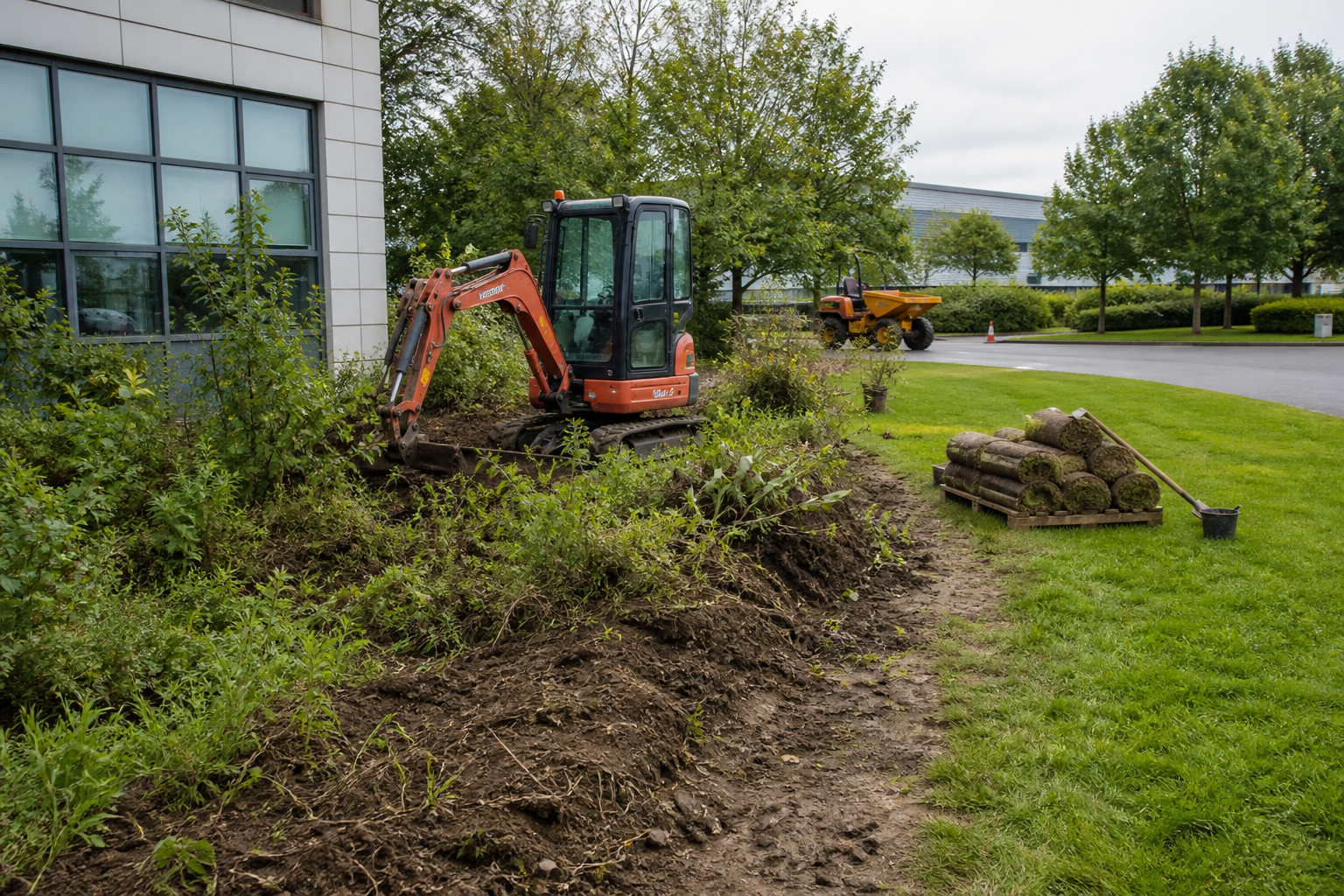
Tree planting rarely performs well on compacted, poorly drained or neglected ground. If the area is overgrown, uneven or full of old surface issues, those problems need addressing first. Good preparation helps create better planting conditions and a smoother installation process.
Where needed, we can coordinate planting with grounds preparation so the new scheme starts from a stronger base. That may include clearing problem areas, improving levels or making the site easier to access before the planting begins.
Build aftercare into the plan
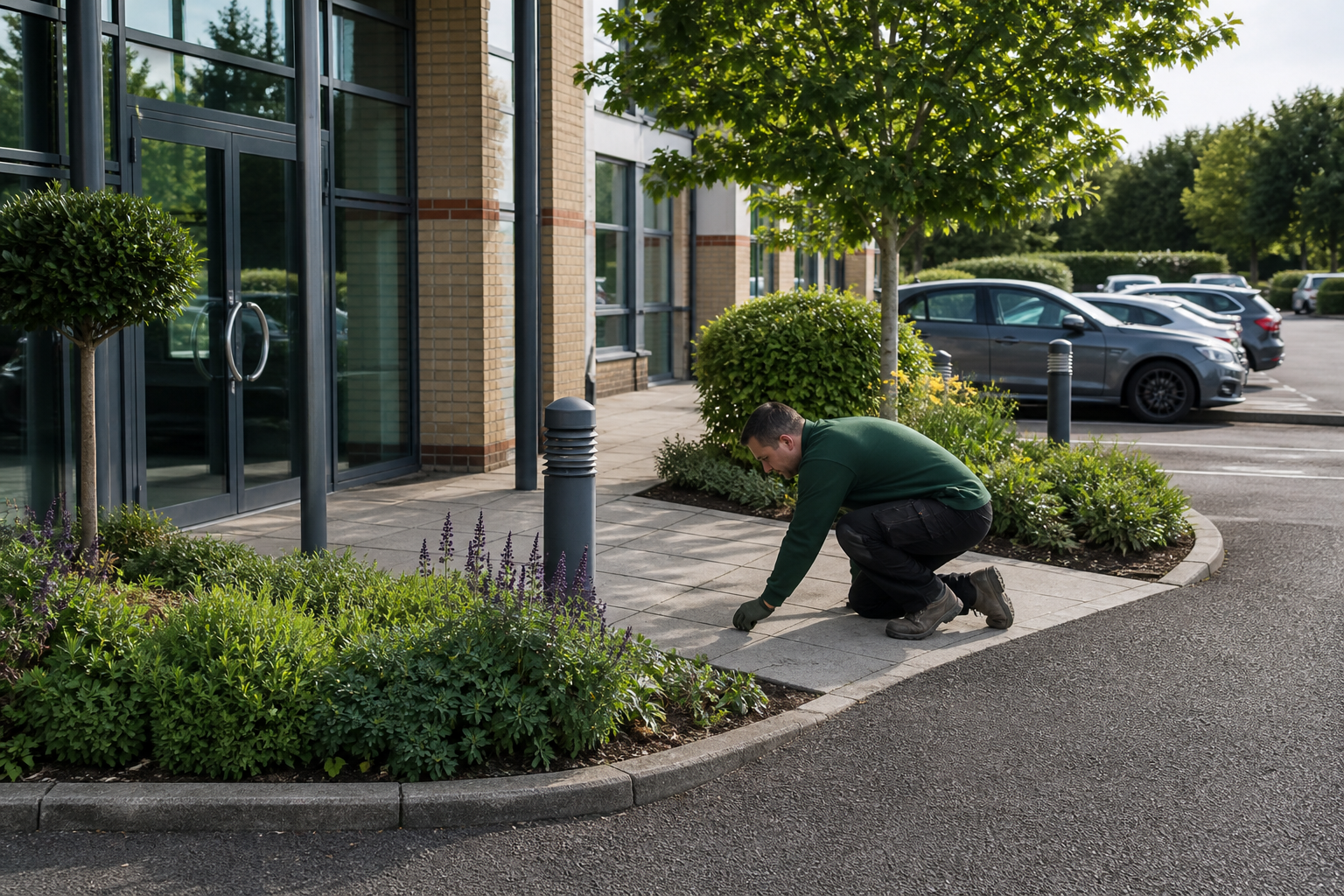
New trees need support while they establish. Watering, mulching, staking checks and weed control all help protect the finish and keep the scheme looking tidy. Without aftercare, even a well-planned installation can lose impact quickly.
For sites that need continued support after planting, we can also provide grounds maintenance support to help keep planting areas presentable and manageable over time.
Commercial tree planting and wider soft landscaping works
Trees usually deliver the best result when they are planned as part of a wider external improvement project rather than as a stand-alone add-on. A planting scheme can work alongside turfing, refreshed borders, boundary improvements and routine maintenance so the whole site feels cohesive.
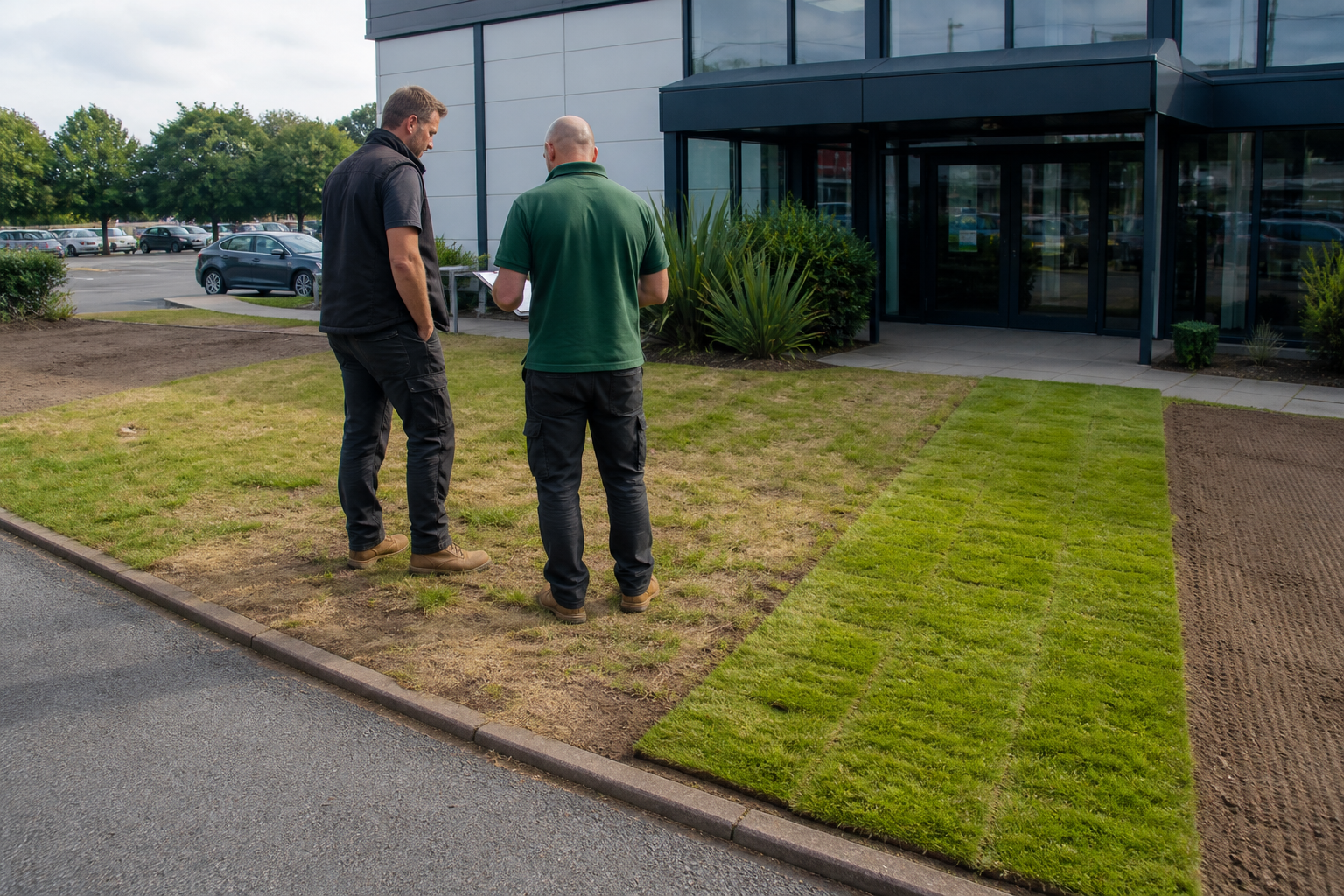
At entrances, trees can be paired with tidy edging and reinstated grass areas
Along boundaries, they can soften fencing and help unify long perimeter lines
In open outdoor areas, they can add structure around paths or shared circulation space
On tired sites, they can form part of a broader presentation upgrade once clearance and preparation have been completed
At Matthew Thomas Landscapes, we provide commercial landscaping services that allow clients to plan planting, boundary treatment and general site improvement together, rather than trying to solve each issue in isolation.
Common mistakes businesses make with commercial tree planting
Choosing only by appearance: a tree may look right initially but become awkward if its mature size does not suit the site.
Planting too close to key features: entrances, parking areas, fence lines and circulation routes all need space to function properly.
Ignoring the ground conditions: poor soil, drainage issues or compacted ground can limit how well new planting establishes.
Underestimating aftercare: new planting still needs attention after installation if it is going to look tidy and establish well.
Treating planting as a separate fix: the strongest result usually comes when tree planting is planned as part of the wider landscaping picture.
A practical planting scheme should improve the site now and still make sense in the years ahead. That is why planning, sequencing and maintenance should all be considered from the start.
A practical approach from Matthew Thomas Landscapes
Established in 2004, we work with commercial, industrial and business clients from Pontarddulais, Swansea and support external improvement projects across the UK. Our focus is on practical, durable and visually appealing outdoor environments that enhance the appearance and functionality of commercial premises.
When we plan commercial tree planting, we look at how the area is used, what impression the site needs to give and how the finished scheme will be maintained over time. That helps us recommend planting that is realistic as well as attractive.
Tree planting planned around real site conditions
Clear coordination with preparation and soft landscaping works
Reliable workmanship and efficient project management
Recommendations that balance appearance, function and upkeep
If planting is only one part of a larger upgrade, we can help shape a sensible programme so the work is sequenced properly and the finished site feels joined up.
Frequently asked questions about commercial tree planting
What does commercial tree planting involve for business premises?
Commercial tree planting involves more than planting trees in spare ground. It usually includes reviewing the site layout, choosing suitable locations, assessing the condition of the ground, selecting appropriate trees and planning aftercare so the finished scheme looks good and remains practical to maintain.
Where should trees be planted around a commercial entrance?
Trees are often most effective where they frame the approach to the building, soften hard frontage areas or improve the feel of visitor routes. The exact position should protect sightlines, signs, access and parking while still improving the overall appearance of the entrance.
Do I need ground preparation before planting trees on a commercial site?
In many cases, yes. Compacted soil, drainage issues, overgrowth or uneven ground can all affect how well new planting establishes. Early preparation helps create stronger planting conditions and can prevent avoidable problems later.
Can commercial tree planting be combined with fencing and turfing?
Yes. Tree planting often works best when it sits within a wider landscaping plan. It can be combined with fencing, turf laying, weed control and general soft landscaping so the entrance, boundary and surrounding outdoor spaces feel consistent.
How do I keep newly planted trees looking tidy on business premises?
Regular aftercare makes the biggest difference. Watering, mulching, checking supports and keeping the base of the trees clear of weeds all help protect the appearance of the planting while it establishes. Ongoing maintenance planning is especially important on larger or customer-facing sites.
Plan commercial tree planting with Matthew Thomas Landscapes
If you want to improve entrances, define boundaries or make outdoor areas more attractive and practical, we can help you plan a planting scheme that suits your site.
Book a consultation with Matthew Thomas Landscapes to discuss commercial tree planting and related soft landscaping works for your premises.
Conclusion
Commercial tree planting works best when it is shaped around the real needs of the site. The right trees in the right places can improve arrival points, strengthen boundaries and make outdoor areas feel more complete. With clear planning, good preparation and sensible aftercare, tree planting becomes a lasting asset rather than a short-term cosmetic fix.
From our base in Pontarddulais, Swansea, we work with businesses that want practical, well-managed external improvements. If your premises could benefit from better planting, we would be pleased to discuss the next steps.